
gutenberg
Introduction to Fabada Asturiana
Hey there, fellow food lovers! If you’re anything like me, you know that life can get pretty hectic, especially when juggling work, family, and everything in between. That’s why I’m excited to share my go-to recipe for Fabada Asturiana. This traditional Spanish bean stew is not just a meal; it’s a warm hug in a bowl! Perfect for those busy weeknights or when you want to impress your loved ones without spending hours in the kitchen. Trust me, once you try this hearty dish, it’ll become a staple in your home, bringing comfort and joy to your table.
Why You’ll Love This Fabada Asturiana
Let’s be real—finding time to cook can feel like a juggling act, right? That’s where Fabada Asturiana shines! It’s not only easy to make, but it also packs a punch of flavor that will have your family asking for seconds. Plus, it’s a one-pot wonder, which means less cleanup for you! With its rich, hearty taste, this dish is sure to warm your heart and satisfy even the pickiest eaters at your table.
Ingredients for Fabada Asturiana
Now, let’s dive into the delicious ingredients that make Fabada Asturiana a true delight! Each component plays a vital role in creating that rich, hearty flavor we all crave. Here’s what you’ll need:
- Dried fabes (Asturian white beans): These creamy beans are the star of the show! If you can’t find them, any good-quality white beans will do. Just remember, dried beans need soaking overnight.
- Chorizo: This spicy Spanish sausage adds a wonderful depth of flavor. If you prefer a milder taste, you can opt for sweet chorizo instead.
- Morcilla (blood sausage): A traditional ingredient that brings a unique richness to the stew. If you’re not a fan, feel free to skip it or substitute with another sausage.
- Pancetta or bacon: This adds a savory, smoky flavor. If you’re looking for a healthier option, turkey bacon works well too!
- Onion: A must-have for any stew, it provides a sweet base flavor. Yellow or white onions are perfect for this dish.
- Garlic: Because who doesn’t love garlic? It adds a fragrant kick that elevates the entire dish.
- Smoked paprika: This spice is what gives Fabada Asturiana its signature smoky flavor. If you can’t find smoked paprika, regular paprika will work, but it won’t have that same depth.
- Bay leaf: Just one leaf adds a subtle herbal note that enhances the overall flavor. Don’t forget to remove it before serving!
- Chicken or vegetable broth: This is the liquid gold that brings everything together. Homemade broth is fantastic, but store-bought works just as well for busy nights.
- Salt and pepper: Essential for seasoning! Adjust to your taste, but remember that the meats will add some saltiness too.
- Fresh parsley: A sprinkle of this vibrant herb at the end brightens up the dish and adds a pop of color.
For those of you who might want to switch things up, I’ve got you covered! You can find the exact measurements for each ingredient at the bottom of the article, ready for printing. Happy cooking!
How to Make Fabada Asturiana
Now that we have our ingredients ready, let’s get cooking! Making Fabada Asturiana is a straightforward process, and I promise it’s worth every minute. Follow these simple steps, and you’ll have a delicious, hearty stew that will warm your soul.
Step 1: Prepare the Beans
If you’re using dried fabes, the first step is to soak them overnight. This helps them cook evenly and become tender. Just cover them with water in a bowl and let them sit. If you’re short on time, canned white beans are a great shortcut—just drain and rinse them before using. Easy peasy!
Step 2: Cook the Pancetta
In a large pot, heat things up over medium heat. Toss in your diced pancetta or bacon and cook until it’s crispy and golden. This will take about 5-7 minutes. The sizzling sound is music to my ears! Once it’s done, remove it from the pot and set it aside, but don’t toss that flavorful fat—leave it in the pot. It’s going to add so much flavor to our stew!
Step 3: Sauté the Vegetables
Next, add the chopped onion to the pot. Sauté it for about 5 minutes until it’s translucent and fragrant. Then, throw in the minced garlic and cook for another minute. The aroma will fill your kitchen, and trust me, it’s heavenly! This step is crucial because it builds the base flavor for your Fabada Asturiana.
Step 4: Add the Meats
Now it’s time to bring in the stars of the show: the chorizo and morcilla! Add the sliced chorizo and morcilla to the pot, cooking for about 3-4 minutes until they start to brown. This is where the magic happens—the flavors meld together beautifully, creating a rich, savory base for your stew.
Step 5: Combine Ingredients
Once the meats are nicely browned, it’s time to add the beans. If you soaked your fabes, drain them and add them to the pot. If you’re using canned beans, just toss them in. Then, sprinkle in the smoked paprika and toss in the bay leaf. Pour in the chicken or vegetable broth, and give everything a good stir. Bring it to a boil, then reduce the heat to low.
Step 6: Simmer the Stew
Let your stew simmer gently for about 1.5 to 2 hours if you used dried beans. If you opted for canned beans, a quick 30-minute simmer will do. This is the perfect time to relax and maybe pour yourself a glass of wine! Just keep an eye on it, stirring occasionally. You want those beans to be tender and soak up all those delicious flavors.
Step 7: Final Touches
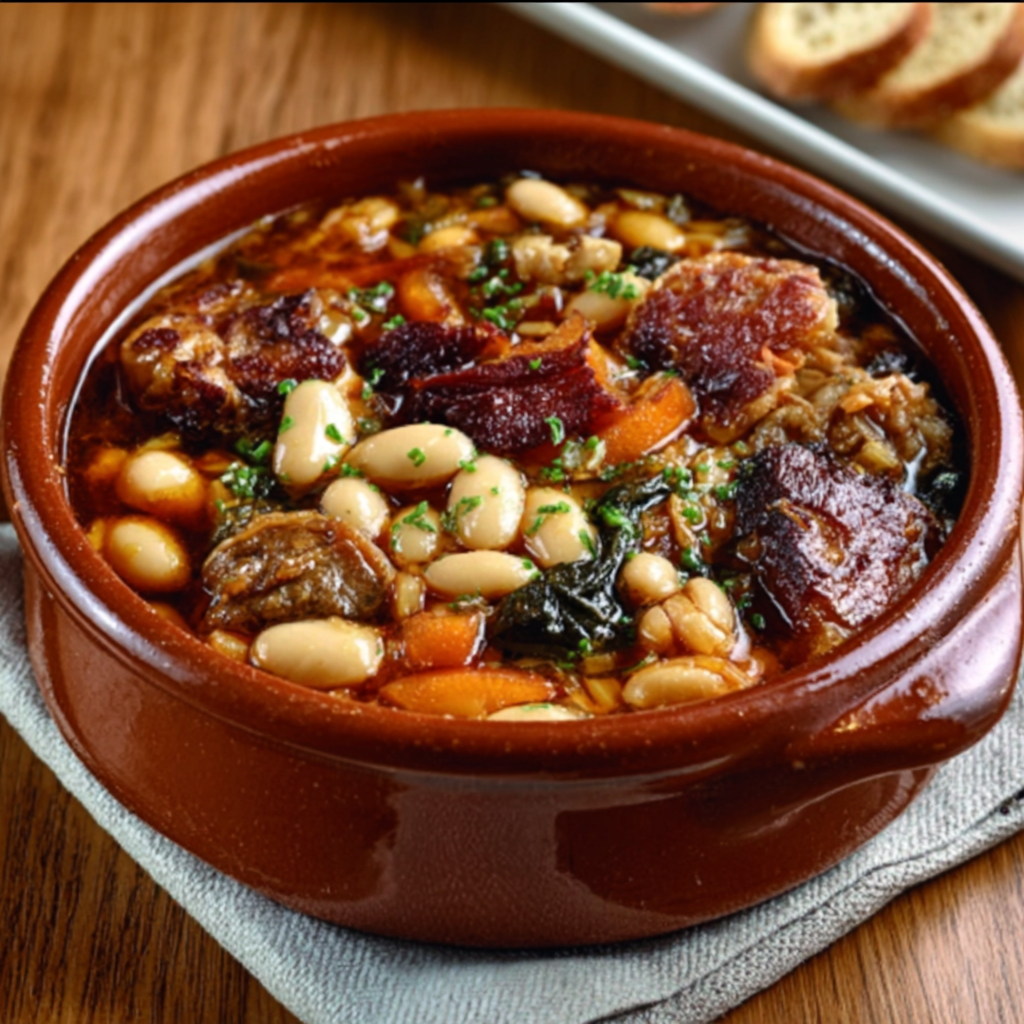
Once the beans are tender, it’s time to season your Fabada Asturiana with salt and pepper to taste. Don’t forget to remove the bay leaf before serving! Garnish with fresh parsley for a pop of color and freshness. Serve it hot, and watch your family’s faces light up with joy. You’ve just created a comforting, hearty meal that’s sure to impress!
Tips for Success
- Soak your dried beans overnight for the best texture; it makes a world of difference!
- Don’t rush the sautéing process; it builds flavor that’s worth the wait.
- Feel free to adjust the spices to suit your family’s taste—add a pinch of cayenne for heat!
- Make it a day ahead; Fabada Asturiana tastes even better the next day!
- Serve with crusty bread to soak up all that delicious broth.
Equipment Needed
- Large pot or Dutch oven: Essential for simmering your stew. A heavy-bottomed pot works well too!
- Wooden spoon: Perfect for stirring and scraping up those tasty bits from the bottom.
- Measuring cups and spoons: Handy for accurate ingredient measurements.
- Cutting board and knife: For chopping your veggies and meats with ease.
Variations of Fabada Asturiana
- Vegetarian Fabada: Omit the chorizo and morcilla, and add more vegetables like carrots, bell peppers, and zucchini. Use smoked paprika to maintain that rich flavor.
- Spicy Fabada: For those who love a kick, add a pinch of cayenne pepper or some diced jalapeños to the mix. It’ll give your stew a delightful heat!
- Seafood Fabada: Swap out the meats for seafood like shrimp or mussels. Add them in during the last 10 minutes of cooking for a fresh twist.
- Quinoa Fabada: For a gluten-free option, replace some of the beans with cooked quinoa. It adds a nutty flavor and extra protein!
- Herb-Infused Fabada: Experiment with fresh herbs like thyme or rosemary for a fragrant twist. Just toss them in during the simmering stage.
Serving Suggestions for Fabada Asturiana
- Crusty Bread: Serve with a loaf of fresh, crusty bread to soak up that delicious broth.
- Green Salad: A light green salad with a tangy vinaigrette balances the richness of the stew.
- Red Wine: Pair with a glass of robust red wine for a delightful dining experience.
- Garnish: Top with a sprinkle of fresh parsley for a pop of color and freshness.
FAQs about Fabada Asturiana
As you embark on your culinary journey with Fabada Asturiana, you might have a few questions. Don’t worry; I’ve got you covered! Here are some common queries that pop up when making this delightful dish:
1. Can I use canned beans instead of dried fabes?
Absolutely! Canned white beans are a fantastic time-saver. Just make sure to drain and rinse them before adding them to your stew. This will cut down your cooking time significantly, making Fabada Asturiana a quick weeknight meal!
2. What if I can’t find morcilla?
No worries! If morcilla isn’t available, you can either skip it or substitute it with another type of sausage, like kielbasa or even a spicy Italian sausage. While it won’t be the traditional version, it’ll still be delicious!
3. How can I make this dish vegetarian?
To create a vegetarian version of Fabada Asturiana, simply omit the chorizo and morcilla. You can enhance the flavor by adding more vegetables, like carrots and bell peppers, and don’t forget to use smoked paprika for that signature taste!
4. Can I freeze leftovers?
Yes! Fabada Asturiana freezes beautifully. Just let it cool completely, then transfer it to an airtight container. It can be stored in the freezer for up to three months. When you’re ready to enjoy it again, simply thaw and reheat on the stovetop.
5. What should I serve with Fabada Asturiana?
This hearty stew pairs wonderfully with crusty bread for dipping. A light green salad with a tangy vinaigrette also complements the richness of the dish. And if you’re feeling fancy, a glass of robust red wine will elevate your dining experience!
Final Thoughts
Cooking Fabada Asturiana is more than just preparing a meal; it’s about creating a moment of warmth and connection with your loved ones. The rich, hearty flavors wrap around you like a cozy blanket, making even the busiest days feel special. Whether you’re sharing it with family on a chilly evening or enjoying leftovers for lunch, this dish brings joy to the table. So, roll up your sleeves, embrace the process, and let the delightful aromas fill your kitchen. Trust me, once you serve this stew, it’ll become a cherished favorite in your home!
“`
Print
Fabada Asturiana: Discover the Authentic Recipe Today!
- Total Time: 14 hours
- Yield: 6 servings 1x
- Diet: Gluten Free
Description
Fabada Asturiana is a traditional Asturian bean stew made with white beans, chorizo, morcilla, and pancetta, offering a rich and hearty flavor.
Ingredients
- 2 cups dried fabes (Asturian white beans) or 1 can (15 ounces) white beans, drained and rinsed
- 8 ounces chorizo, sliced
- 8 ounces morcilla (blood sausage), sliced
- 4 ounces pancetta or bacon, diced
- 1 large onion, chopped
- 4 cloves garlic, minced
- 1 teaspoon smoked paprika
- 1 bay leaf
- 6 cups chicken or vegetable broth
- Salt and pepper to taste
- Fresh parsley, chopped (for garnish)
Instructions
- If using dried fabes, soak them in water overnight. Drain and rinse before using. If using canned beans, skip this step.
- In a large pot, cook the pancetta or bacon over medium heat until crispy. Remove and set aside, leaving the fat in the pot.
- Add the chopped onion to the pot and sauté until translucent, about 5 minutes. Add the minced garlic and cook for an additional minute.
- Stir in the sliced chorizo and morcilla, cooking for about 3-4 minutes until they start to brown.
- Add the soaked fabes (or canned beans), smoked paprika, bay leaf, and broth to the pot. Bring to a boil, then reduce heat to low and simmer for about 1.5 to 2 hours, or until the beans are tender.
- If using canned beans, simmer for about 30 minutes. Season with salt and pepper to taste.
- Remove the bay leaf before serving. Garnish with fresh parsley and serve hot.
Notes
- For a vegetarian version, omit the chorizo and morcilla and use smoked paprika for flavor. Add more vegetables like carrots and bell peppers.
- Serve with crusty bread on the side for a hearty meal, or top with a dollop of sour cream for added creaminess.
- Prep Time: 12 hours
- Cook Time: 2 hours
- Category: Main Course
- Method: Stovetop
- Cuisine: Spanish
Nutrition
- Serving Size: 1 bowl
- Calories: 350
- Sugar: 1g
- Sodium: 800mg
- Fat: 15g
- Saturated Fat: 5g
- Unsaturated Fat: 10g
- Trans Fat: 0g
- Carbohydrates: 30g
- Fiber: 8g
- Protein: 20g
- Cholesterol: 40mg